The Sempaya Hot Springs in Uganda

The Sempaya Hot Springs in Uganda

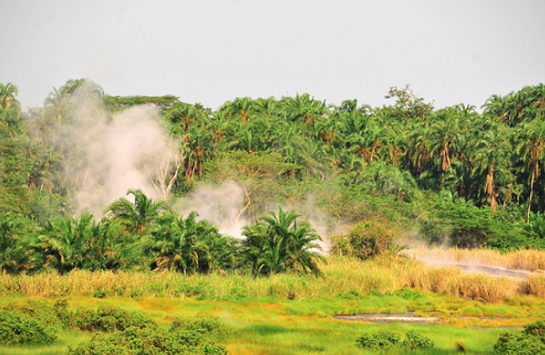
The Sempaya Hot Springs in Uganda : is the most activity within Semuliki National park and is a must-do for all tourists to this Park. There are generally two Hot springs; The Male hot spring called Biteete and the female called Nyasimbi. Biteete measures about 12 meters in diameter while Nyasimbi is a boiling geyser that ejects out hot water and steam at about 2 meters into the air. Attracting hordes of tourists each year, these hot springs have a geyser that shoots up from a hole at  hot temperatures.

In fact, the water is so hot in that you can boil an egg and eat it within ten minutes. Since both springs reaches 100 degrees Celsius, it is well known in history that you can cook food with 5-10 minutes. Besides, the park hosts primate species and these include; the red-tailed monkey, grey-cheeked mangabey, etc. Bird species include; hornbills, blue-breasted kingfisher, yellow throated tinkerbird, Frasier’s ant-thrush, etc.

History behind Sempaya

The name ‘Sempaya’ was derived from builders who could speak Swahili. Most of the locals know the hot springs as Sempaya which originated from a Kiswahili phrase Sehemu mbaya. This resulted from the steep challenging rocks and terrain. This was during the construction of the Fort Portal- Bundibugyo road along the ridges of the Rwenzori Mountains. On the other hand, scientists have a technical explanation to the origins of the hot springs. However, the indigenous Bamaga clan neighboring the tourist attraction in Semuliki National Park have also their own story from the folk lore.Sempaya geysers are steeped in a legend of the Bamaga clan, among the Bamba.

It is said a man named Biteete went hunting in the thick forest but one time never returned home. After three days, the men went out to search for him and at the present day male hot spring. Surprisingly, they only found a spear but no traces of the man. It was assumed he had disappeared from the same spot and they ran back to tell the wife Nyansimbi. A few days later, Nyasimbi mounted the search to clear mysteries around her missing husband. She also disappeared in the forest and only her clothes were found at the present day female hot springs. This was how the two springs became to be known as the male and female hot springs. To-date the Bamaga believe their female ancestors live beneath the female hot spring while their male ancestors live at the male springs. 

How to get to the springs

It takes approximately 52-kilometre drive from the city centre of KampalaUganda on tarmac to reach Sempaya. It can also be reached via a short guided walking trail not more than 500m from the Sempaya Information Office.

The Great Wildebeest Migration in Africa

The Great Wildebeest Migration in Africa

The Great Wildebeest Migration in Africa : is one of the world’s most thrilling, intriguing and spectacular displays of wildlife behavior. Generally, the migration moves down the eastern side of Tanzania’s Serengeti into these sweet short-grass plains. From the western part of Serengeti, the herds head north to Masai Mara in Kenya. In fact, the Wildebeests cross the Mara River and Grumeti Rivers before they reach the Masai Mara Game Reserve. The rivers at times are easy to cross however, there are times when they become violent and end up killing many wildebeests. The wildebeest settle in the southern plains between January and April as there’s lots of food.

The annual migration of wildlife between Serengeti and Maasai Mara takes place between July and October.  The migration of almost two million wildebeest, zebras and other species is nature’s greatest spectacle on earth. Over 2million and plus wildebeest and 200,000 zebra and gazelle, migrate in a clockwise fashion over 1,800 miles each year in search of rain ripened grass. Besides, they also face a challenge of reduction in number before reaching the destination. Thousands of the ungainly, horned animals fall prey to predators each year. On the other hand, others perish from broken bones and drowning. One of the most hazardous moments comes when the herd must swim across the Mara River, shortly after passing from Tanzania into Kenya. You probably need to spend a minimum of 4 days and three nights at the Masai Mara for you to enjoy the full scope of wildlife. 

Wildebeest facts
Appearance

The species forming the large herds of the Serengeti-Mara ecosystem of Kenya and Tanzania is known as the western white-bearded wildebeest. The eastern white-bearded races inhabit Kenya and Tanzania east of the Gregory Rift. The wildebeest is also called the “gnu an antelope in the genus Connochaetes. It belongs to the family Bovidae, which includes antelopes, cattle, goats, sheep, and other even-toed horned ungulates. Connochaetes includes two species, both native to Africa: the black wildebeest or white-tailed gnu and the blue wildebeest. Fossil records suggest these two species diverged about one million years ago.

This resulted into the northern and a southern species. The blue wildebeest remained in its original range and changed very little from the ancestral species. However, the black wildebeest changed more as adaptation to its open grassland habitat in the south. The most obvious way of telling the two species apart are the differences in their coloring and in the way their horns are oriented. In East Africa the blue wildebeest is the most abundant big-game species. Some populations perform an annual migration to new grazing grounds but the black wildebeest is merely nomadic.

Diet

Both sexes basically possess a pair of large curved horns. The blue wildebeest is herbivore and  feeding primarily on short grasses. They also travel in large herds and are active day and night, grazing constantly.

Behavior

Wildebeest often graze in mixed herds with zebra, which gives heightened awareness of potential predators. They are also alert to the warning signals emitted by other animals such as the baboon. They compete with domesticated livestock for pasture and are sometimes blamed by farmers for transferring diseases and parasites to their cattle. 

Breeding

Breeding in both takes place over a short period of time at the end of the rainy season. The calves are soon active and are able to move with the herd, a fact necessary for their survival. Nevertheless, some fall prey to large carnivores especially the spotted hyena.

Habitat

Their habitat comprises the grassy plains and open woodlands of central, southern and eastern Africa. Particularly the Serengeti in Tanzania and Masai mara game reserve in Kenya. Its range extends from Namibia and South Africa to Mozambique and from southwestern Zambia to southern Angola.